Research robots are becoming more useful because they can repeat physical tasks while recording what happens. That matters when a lab needs results it can check, compare, and improve rather than a single successful demonstration.
- Robots repeat the same motion while logging position, force, and timing.
- Mobile platforms let researchers test autonomy outside fixed lab setups.
- The main limit is still transfer: a result in one space may fail in another.
Robots turn physical work into measured data
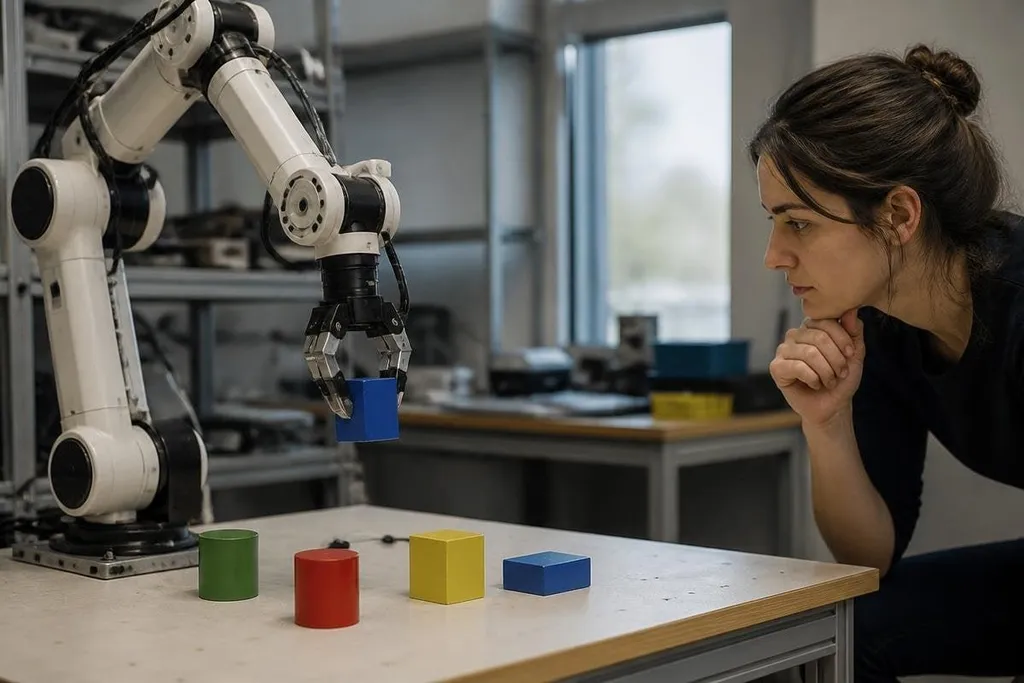
A researcher studying grasping can record how a robot closes its fingers around an object, how much force it applies, and when the object slips. The robot’s sensors turn a physical action into data that another team can inspect.
That record helps separate a real improvement from a lucky run. If a new control method reduces failed grasps across repeated trials, the result has a clearer base for comparison. The same method applies to walking, navigation, manipulation, and contact with soft materials.
Repeatability also saves lab time. A robot can run a test while a researcher prepares the next setup, then repeat the task under changed lighting, surface conditions, or object positions. The person still chooses the question and checks the result; the robot handles the repeated motion.
The value depends on good experiment design. Poor sensor placement, loose calibration, or a changing test setup can produce tidy data that says little about the task.
Physical robots expose problems that software misses
Simulation lets a team test many control ideas without risking hardware. It cannot fully reproduce a loose cable, a slippery floor, a bent part, sensor noise, or the small delay between a command and a motor response.
Those details matter because robots act through physical contact. A gripper may need to change its force when an object shifts. A mobile robot may need to revise its route when a person blocks a corridor. A walking platform has to manage balance while its feet meet surfaces that differ from the model.
Research robots give teams a place to measure these failures. That makes them useful before a system reaches a factory, hospital, farm, or outdoor site. The lab machine does not need to match the final product, but it must expose the part of the problem the team wants to study.
A result from simulation can hide the work needed to move a real arm. Robot24.com can show whether a reported result came from a physical test, software, or a controlled demo. That question leads to the separate fields these research platforms bring together.
Research platforms connect separate fields
A research robot can carry work from several areas into one test.
Perception helps it identify objects or terrain. Planning selects a sequence of actions. Control turns those actions into motor commands. Mechanical design decides whether the body can perform them safely.
That connection matters because a strong result in one area may expose a weakness in another. A vision system may identify a cup correctly, but the arm still needs a reachable path and a grip that holds the cup without damage. A navigation system may map a room, but the robot also needs enough battery power and safe stopping behavior.
Shared platforms make comparisons easier when teams use the same hardware, software interfaces, or task setup. The comparison still needs care. A result may depend on the robot’s sensors, motor limits, software version, or the way researchers selected the test cases.
I’d judge a research robot by the question it helps answer, not by how human its body looks. A small arm with repeatable force control can teach more about grasping than a larger machine with a polished demo.
What to check before trusting a result
Use this checklist when you read a paper, watch a demonstration, or compare research platforms:
- Task definition: What exact action did the robot perform, and what counted as success?
- Test conditions: Did the team change lighting, surfaces, object positions, or obstacles?
- Failure record: Are failed attempts shown, or only the successful runs?
- Human input: Did an operator guide the robot, reset it, or select each action?
- Repeatability: Can another team rebuild the setup and run the same test?
- Transfer plan: What step would show that the result works outside the lab?
A research robot becomes more useful when the team can explain its limits as clearly as its result. That includes the hardware it used, the data it recorded, the conditions it did not test, and the work still needed before deployment.
The next question is not whether research robots will replace laboratory work. It is which physical tasks they can repeat well enough to give researchers better evidence, and how quickly those results hold up outside the test room.